How to Make Your Content Appear in ChatGPT Answers (2026 Guide)
Millions of people now use ChatGPT alongside traditional search engines like Google. They get a clear, written answer in seconds — and sometimes, that answer includes links to websites it used as sources.
If your website is one of those cited sources, you get something valuable: visibility in front of people who may never have found you through traditional search. That is why so many website owners now want to know how to appear in ChatGPT answers.
The good news is that this is not magic or luck. OpenAI publicly explains part of how ChatGPT search works, but not the full source-selection logic. This means we can observe patterns and apply practical SEO principles, but no one outside OpenAI knows the exact ranking or citation system.
This guide explains — in simple language — how ChatGPT finds content, what kind of content it tends to reference, and the practical steps you can take to improve your chances of showing up. Every tip here is something you can actually act on.
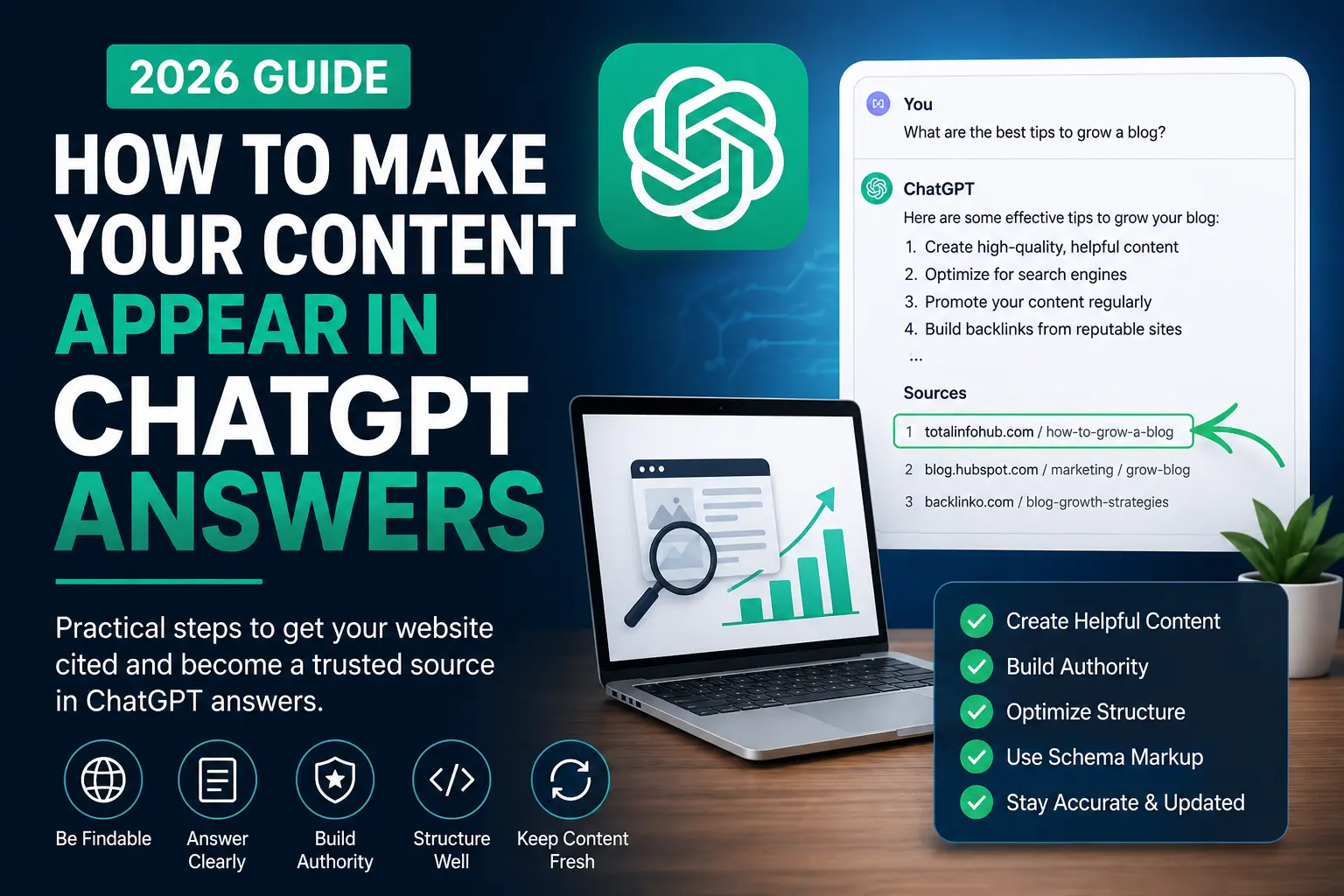
Quick Summary: How to Get Cited by ChatGPT
|
Step |
What to Do |
|---|---|
|
Be findable |
Make sure your content is indexed and crawlable |
|
Answer clearly |
Lead with direct, clear answers to specific questions |
|
Build authority |
Strengthen your E-E-A-T and credibility signals |
|
Structure well |
Use headings, FAQs, and clean formatting |
|
Stay accurate |
Keep content factual and well-sourced |
|
Cover topics deeply |
Build real depth on your subject areas |
How Does ChatGPT Find and Use Content?
To optimize for ChatGPT, it helps to understand how it works — in simple terms.
ChatGPT has two main ways of answering questions:
From its training data ChatGPT was trained on a large amount of text from the internet up to a certain point in time. When you ask a general question, it often answers from this built-in knowledge. This training data has a cutoff date, so it does not include the very latest information.
From live web search When ChatGPT uses its web search capability, it can look up current information on the internet in real time — and cite the sources it finds. This is the mode most relevant for getting your content referenced, because it actively pulls from live websites and links to them.
When ChatGPT uses web search, it retrieves and evaluates live web sources to help generate its answer, which makes many traditional SEO principles highly relevant. So the goal of appearing in ChatGPT answers is largely about being one of those credible, relevant, easy-to-understand sources.
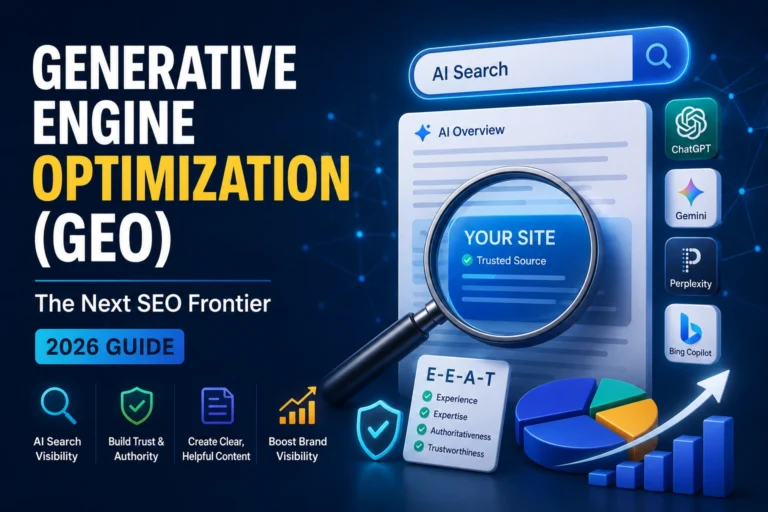
This overlaps heavily with generative engine optimization (GEO) — the broader practice of optimizing for AI answer engines. Much of what helps you on ChatGPT also helps you on Google AI Overviews and Perplexity.
Why Appearing in ChatGPT Answers Matters
You might wonder whether this is worth the effort. Here is why it increasingly matters.
People are using ChatGPT for research. A growing number of users turn to ChatGPT before, or instead of, Google for many questions. Being visible there reaches an audience you might otherwise miss.
Citations build brand awareness. Even when someone does not click your link, seeing your brand cited as a source builds recognition and trust over time.
It drives referral traffic. When ChatGPT cites your content with a link, interested users can click through to your site — bringing you visitors who are already engaged with your topic.
It signals authority. Being referenced by AI systems reinforces your position as a credible source in your field, which supports your broader visibility.
It future-proofs your strategy. As AI search continues to grow, building this visibility now gives you an advantage over competitors who wait. This connects to the broader shift covered in our guide on how AI search is changing SEO.
The bottom line: appearing in ChatGPT answers is becoming a meaningful visibility channel, not a niche curiosity.
Can You Directly Control What ChatGPT Says?
It is important to be honest here: you cannot directly control or guarantee what ChatGPT says about any topic, or force it to cite your content.
ChatGPT generates answers based on its training and the sources it finds, using its own systems. There is no “submit your site to ChatGPT” button that guarantees citation, and no payment that buys you a spot in its answers.
What you can do is improve your chances. By making your content credible, clear, well-structured, and easy for AI to find and understand, you increase the likelihood of being selected as a source. Think of it like traditional SEO — you cannot force Google to rank you first, but you can do many things that improve your chances significantly.
So this guide is about improving your odds, not guaranteeing a result. Anyone promising guaranteed ChatGPT citations is overselling. The realistic goal is to make your content the kind of content AI systems naturally want to reference.
How to Make Your Content Appear in ChatGPT Answers
Here are the practical steps, in order of importance.
1. Make Sure Your Content Is Crawlable
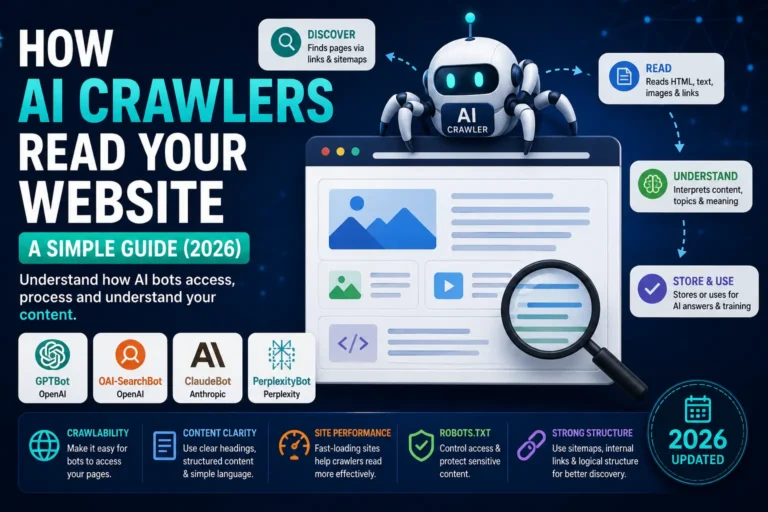
Before ChatGPT can cite your content, it has to be able to find and read it.
- Make sure your important pages are indexed and not blocked from crawlers
- Check your robots.txt file is not accidentally blocking access
- Ensure your site loads properly and quickly
- Submit your sitemap to search engines
If your content cannot be found and read, none of the other steps matter. This is the foundation. A solid understanding of technical SEO helps you get this right.
2. Write Clear, Direct Answers
ChatGPT favors content that answers questions clearly and directly. When it builds an answer, it needs to extract clear information from sources.
- Lead each section with a direct answer to the question it addresses
- State your main point first, then add supporting detail
- Avoid long, rambling introductions before getting to the point
- Use plain, clear language that is easy to understand
A simple test: if someone asked ChatGPT the question your section answers, could it easily pull a clear, accurate sentence from your content? If yes, you are on the right track.
3. Build Strong Topical Authority
Based on observed patterns, AI systems often appear to favor sources that demonstrate genuine depth and expertise on a topic, rather than thin, surface-level content.
- Cover your main topics thoroughly and comprehensively
- Create connected content — a main guide supported by related articles
- Link related pieces together so the full scope of your coverage is clear
- Answer the related questions your audience also asks
When your site clearly demonstrates expertise across a topic, it becomes a more natural source for AI to reference. Building this depth starts with strong keyword research in the age of AI.
4. Strengthen Your E-E-A-T Signals
E-E-A-T (Experience, Expertise, Authoritativeness, Trustworthiness) describes the credibility signals that influence which sources AI systems trust.
- Experience — include real, first-hand insights and practical knowledge
- Expertise — use named authors with relevant credentials
- Authoritativeness — earn references and mentions from other credible sources
- Trustworthiness — keep information accurate, cite sources, and maintain a clear identity
Credible content from trustworthy sources is more likely to be referenced. These signals matter across all AI answer engines, not just ChatGPT.
5. Structure Content for Easy Extraction
How you organize your content affects how easily AI can use it.
- Use question-based headings that match how people ask questions
- Add FAQ sections — question-and-answer pairs are highly extractable
- Use lists and clear formatting — easier to parse than dense text blocks
- Keep paragraphs short and focused on one idea
Well-structured content is simply easier for AI systems to read, understand, and pull from. This is the same structure that helps with SEO for answer engines more broadly.
6. Keep Your Content Accurate and Fresh
Based on observed patterns, AI systems often appear to favor accurate and current information, especially when searching live.
- Keep your important pages updated with current information
- Fix outdated facts, figures, and examples
- Update your “last reviewed” date when you make real changes
- Remove or correct anything inaccurate
Accuracy is especially important because AI systems present cited information to users as reliable. Content that is wrong or outdated is less likely to be trusted and referenced.
7. Earn Mentions and Citations
When other credible sources reference your content, it strengthens your authority — which supports how AI systems view your site.
- Earn links and mentions from reputable websites in your field
- Publish original research or data that others want to cite
- Contribute expert insights to industry publications
- Build genuine relationships within your niche
Each credible mention reinforces your standing as a trustworthy source worth referencing. This works similarly to off-page SEO, with a focus on building citation-worthy authority.
8. Use Schema Markup
Schema markup is structured data that helps search engines and other machine systems understand your content’s type and structure.
- Use FAQPage schema for FAQ sections
- Use Article schema to establish content type and authorship
- Use Organization schema to define your brand
- Implement schema correctly and test it
A note of honesty: schema does not guarantee citation in ChatGPT or any AI system. But OpenAI does not state that schema markup improves citation eligibility in ChatGPT. It remains a useful best practice for improving machine readability.
Content Types Often Observed in ChatGPT Citations
Based on observed patterns, certain content types appear more often in AI-generated answers:
Clear how-to guides Step-by-step content that directly answers “how do I…” questions aligns well with how people use ChatGPT.
Comprehensive explainers In-depth content that thoroughly explains a topic or concept is a natural fit for an AI building a complete answer.
Well-researched comparisons “X vs Y” content gives AI structured information to summarize when users ask about differences.
Definitions and reference content Clear definitions and reference material align with the informational questions people often ask.
Original data and research Unique data and statistics give AI credible material to cite when making factual claims.
FAQ and Q&A content Direct question-and-answer formats are highly extractable and map naturally to user questions.
The common thread: clear, accurate, well-structured content that genuinely answers questions.
Common Mistakes to Avoid
Publishing thin, generic content AI favors depth and substance. Short, generic content rarely gets cited, no matter how well it is structured.
Blocking crawlers accidentally If your robots.txt or settings block access, your content cannot be found. Always check your crawl settings.
Burying your answers If your answer is hidden after long introductions, it is harder for AI to extract. Lead with the answer.
Ignoring accuracy Inaccurate or outdated content is less likely to be trusted and referenced. Keep your information correct and current.
Chasing ChatGPT while ignoring SEO Traditional SEO and AI optimization reinforce each other. Neglecting your SEO foundation weakens both.
Expecting instant results Building the authority and visibility that gets you cited takes time. This is a long-term strategy, not an overnight fix.
Believing guarantees Nobody can guarantee ChatGPT citations. Be skeptical of anyone who claims they can.
How to Check If ChatGPT Cites You
You will want to know whether your efforts are working. Here is how to check.
Ask ChatGPT directly Use ChatGPT with web search enabled and ask questions your content targets. See whether your site appears in the cited sources. This is the most direct method.
Check your referral traffic When ChatGPT cites your content with a link, interested users may click through. Check your analytics for unusual referral traffic and landing page spikes after testing AI visibility.
Monitor branded searches An increase in people searching for your brand name can indicate growing visibility across AI platforms, including ChatGPT.
Test multiple related questions Try various phrasings of questions related to your content. This gives you a fuller picture of where you appear and where you do not.
Use AI monitoring tools Some tools now track AI citations across platforms. Features vary and change frequently, so verify current capabilities. Our roundup of the best AI SEO tools in 2026 covers options for this.
Frequently Asked Questions
Q1: Can I force ChatGPT to cite my website?
No. You cannot force or guarantee that ChatGPT cites your content. ChatGPT generates answers using its own systems, and there is no way to pay for or directly control citations. What you can do is improve your chances by making your content credible, clear, well-structured, and easy to find — much like traditional SEO improves your chances of ranking without guaranteeing it.
Q2: How is appearing in ChatGPT different from ranking on Google?
Ranking on Google means appearing in its list of links so people click through. Appearing in ChatGPT means being used as a source in its written answer, sometimes with a citation link. The foundations overlap — credible, clear, well-structured content helps with both — but ChatGPT focuses on synthesizing answers rather than listing links. Both are part of a connected modern search strategy.
Q3: Does ChatGPT only use its training data, or does it search the web?
Both. ChatGPT can answer from its training data, which has a cutoff date and does not include the latest information. It can also use live web search to find current information and cite sources. For getting your content referenced, the web search mode matters most, because it actively pulls from live websites and links to them.
Q4: Do I need to do anything special, or does good SEO cover it?
Good SEO covers much of the foundation — crawlability, quality content, authority, and clear structure all help with ChatGPT visibility too. The main additions are a stronger focus on direct-answer formatting, FAQ sections, accuracy, and clear topical depth. So it is less about a completely separate strategy and more about extending good SEO with AI-friendly practices.
Q5: How long does it take to appear in ChatGPT answers?
There is no fixed timeline. Some structural improvements can influence visibility within weeks for content that already has authority. Building the topical authority and credibility that consistently gets you cited usually takes months of steady effort. Like SEO, it is a long-term investment that compounds over time rather than an instant result.
Q6: Does schema markup help with ChatGPT visibility?
Schema markup helps AI and search engines understand your content’s structure and type, which can support how your content is parsed and used. However, no schema type guarantees citation in ChatGPT or any AI system. Think of schema as a helpful supporting practice that improves comprehension, not a guaranteed path to being cited.
Q7: Can small websites appear in ChatGPT answers?
Yes, smaller niche websites can sometimes appear in ChatGPT answers when their content is accessible, relevant, and credible. However, this is based on observed examples rather than an official OpenAI guarantee.
Final Verdict
Appearing in ChatGPT answers is no longer a futuristic idea — it is a practical visibility goal for 2026 and beyond.
The encouraging truth is that you do not need special tricks or insider access. The content that gets referenced by ChatGPT is the same content that serves your audience well: clear, accurate, well-structured, genuinely helpful, and backed by real authority. If you focus on creating that, you are already most of the way there.
Remember the honest reality, too: you cannot guarantee or force citations. What you can do is consistently improve your chances by being the kind of credible, clear source that AI systems naturally reference.
Here is where to start:
1. Make sure your content is findable. Check that your key pages are crawlable, indexed, and loading properly — this is the foundation everything builds on.
2. Sharpen your answers and structure. Lead with direct answers, add FAQ sections, and use clear headings that match how people ask questions.
3. Build authority over time. Strengthen your E-E-A-T, cover your topics deeply, keep content accurate, and earn credible mentions.
Do these consistently, and you give yourself the best possible chance of showing up when people ask ChatGPT about your topic. As AI search continues to grow, that visibility becomes more valuable every year.
Disclaimer: AI systems like ChatGPT evolve rapidly, and their exact citation and ranking behavior is not fully documented publicly. The guidance in this article is based on industry observation and publicly available information as of June 2026. No method can guarantee citation in ChatGPT or any AI system. Always test strategies with your own content and verify current best practices.
Sources and Further Reading
Official and Industry Sources
- OpenAI — Official Website — openai.com
- Google Search Central — Structured Data Guidelines — developers.google.com/search
- Schema.org — Structured Data Vocabulary — schema.org
- Search Engine Journal — AI Search Coverage — searchenginejournal.com
Related Guides on TotalInfoHub
- Generative Engine Optimization (GEO) — totalinfohub.com/generative-engine-optimization-geo/
- SEO for Answer Engines — totalinfohub.com/seo-for-answer-engines/
- How AI Search Is Changing SEO — totalinfohub.com/how-ai-search-is-changing-seo/
- Perplexity SEO — totalinfohub.com/perplexity-seo/
- Technical SEO Guide — totalinfohub.com/technical-seo-beginner-to-advanced-guide/
- Best AI SEO Tools in 2026 — totalinfohub.com/best-ai-seo-tools/
Last reviewed: June 2026