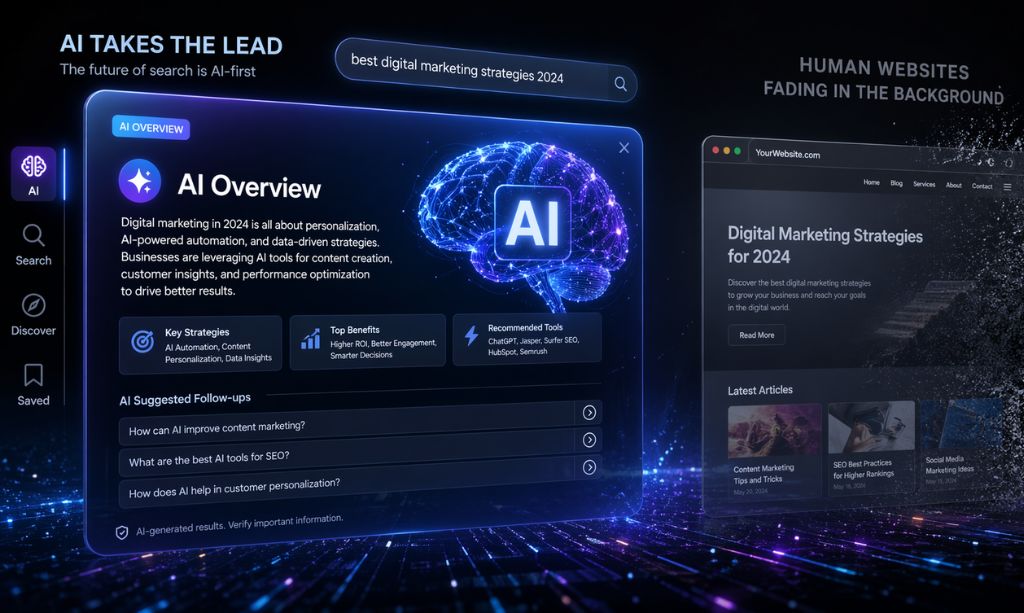
Beyond SEO: Why Your Website Traffic Will Drop by 2027 (And How to Survive the Answer Engine Era)
“By 2027, the websites that survive won’t be the ones with the best keywords, but the ones that the ‘Answer Engines’ cannot afford to ignore.”
Let’s be honest: the era of “free traffic” from search engines is reaching its expiration date. For two decades, we operated on a simple handshake agreement—you created the content, and Google provided the audience.
At Total InfoHub, we have already started noticing a shift in our internal data. High-quality informational posts that used to bring thousands of clicks are now seeing fewer visits, even while staying at the top of the rankings. This is the first sign of a complete digital reset: We are moving from the Search Engine age to the Answer Engine Era.
1. Introduction: The End of Traditional Search
The traditional search experience is being dismantled. We are witnessing a fundamental change in user intent, moving away from “finding a website” to “getting a direct answer.”
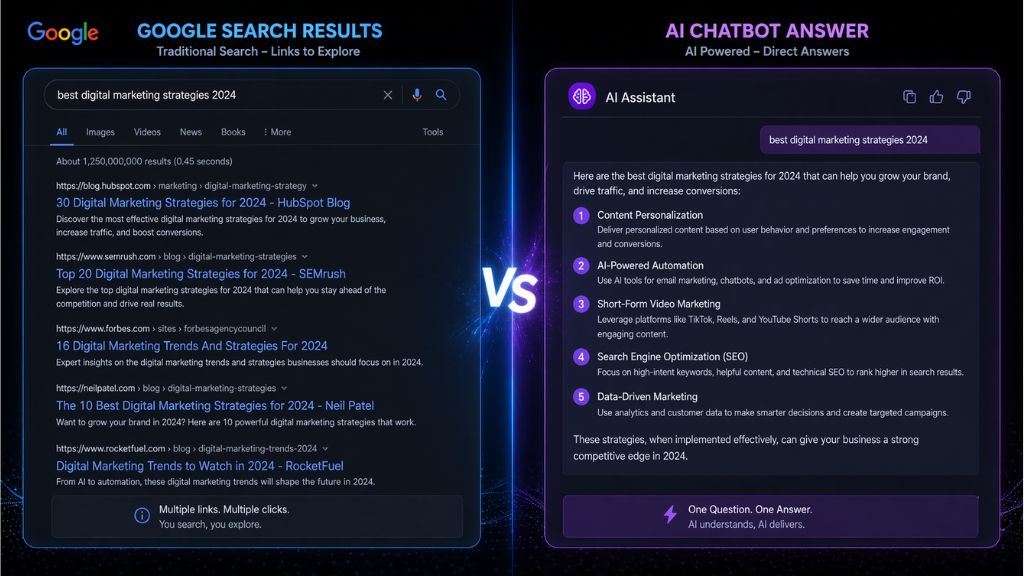
The Shift from “Middleman” to “Destination”
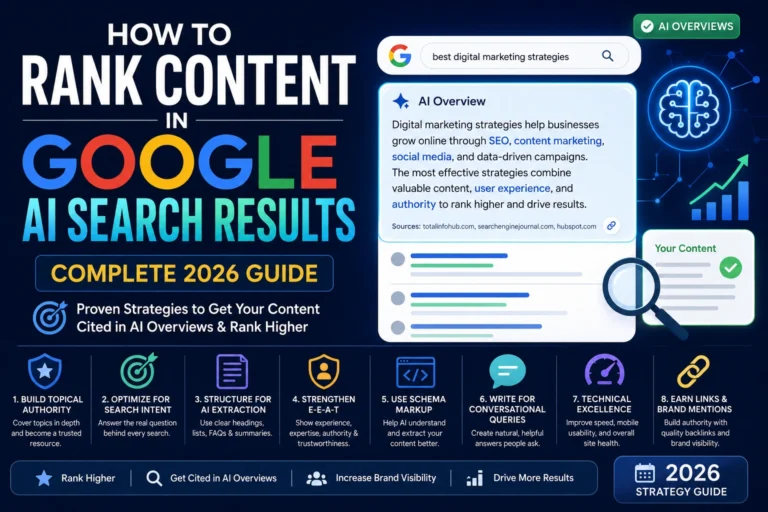
Google used to be a librarian that pointed you toward the right book. Today, Google is trying to be the book itself. Platforms are no longer just indexing your hard work; they are digesting it and presenting the summary to users.
- Real-world Example: If a user searches for “How to fix a slow laptop,” Google’s AI Overview now provides the step-by-step solution immediately. The user gets the value in seconds, but your website gets zero traffic.
- Another Scenario: Searching for a “Sourdough bread recipe” now shows the ingredients and steps directly in the search box. The need to click a link is disappearing.
The Rise of “Ghost Traffic”
Multiple industry-wide studies suggest that over 50% of Google searches now end without a single click to an external website. This is what we call “Ghost Traffic”—people find exactly what they need without ever landing on your site. The demand for instant gratification is killing the traditional browsing habit.
With the full rollout of Google AI Overviews, the search engine is now digesting your content and presenting it as its own. This shift significantly reduces the need for users to click through to external sites.
Why 2027 is the Ultimate Deadline
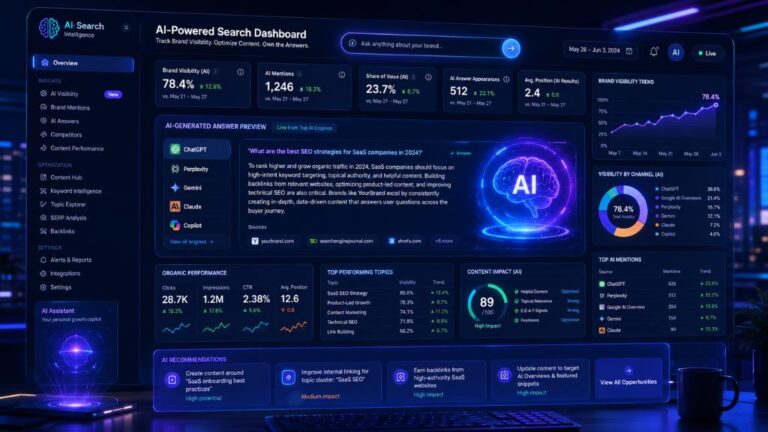
By 2027, AI tools like Gemini and Search Generative Experience (SGE) will be the standard, not an experiment. These engines are no longer just searching the web; they are building a “closed ecosystem” where the middleman is no longer connecting you to your audience—it is replacing you.
2. What is the Answer Engine Era?
To navigate this landscape, we must stop seeing Google as a search engine and start seeing it—along with competitors like ChatGPT Search and Perplexity AI—as Answer Engines.
Defining the New Era
Q: What is the Answer Engine Era?
The Answer Engine Era is a paradigm shift where digital platforms prioritize providing immediate, AI-synthesized responses over a list of external links. It marks the transition from search engines acting as indexes to becoming direct providers of information.
The Core Differences (Old vs. New)
At Total InfoHub, we break down this transition into four key areas:
|
Aspect |
Traditional Search Engine |
Modern Answer Engine |
|---|---|---|
|
User Journey |
Query → Browse Links → Click |
Query → Instant AI Response |
|
Platform Role |
A directory or index |
A personal digital assistant |
|
Content Usage |
Shows snippets to drive traffic |
Summarizes full value on-site |
|
Traffic Impact |
High referral potential |
Focus on Brand Visibility (Low Clicks) |
Originality: Your Only Survival Shield
In this new world, generic content is simply “AI fuel.” If your article is just a rehash of common knowledge, the Answer Engine will summarize it and ignore you. AI doesn’t reward repetition; it rewards unique insights and real-world expertise.
The Emerging Battlefield
The battle for 2027 is already being fought by platforms like OpenAI and Microsoft. Platforms like ChatGPT search features are fundamentally changing digital discovery by providing direct solutions without the middleman. They don’t want users to find a website; they want users to find a solution without leaving their interface. This marks the end of the “keyword-first” mentality and the beginning of a brand-centric, authority-driven world.
3. Why Website Traffic Will Drop by 2027
Let’s face the cold reality: a significant percentage of informational websites are likely to see a major decline in traffic by 2027. This isn’t a pessimistic guess—it is a logical projection of how search is evolving.
The Death of Informational Clicks
If your content strategy is built on answering basic questions like “What is SEO?” or “How many calories are in a bowl of rice?”, you are in the danger zone. AI systems like Gemini and ChatGPT are designed to deliver these answers instantly.
Advanced AI models like the Gemini AI system are now capable of summarizing complex 10-minute reads into 10-second bullet points, leaving little incentive for users to visit the source.
At Total InfoHub, we are already seeing this firsthand: deep-dive informational queries are increasingly being bypassed as users find everything they need within these rapid AI overviews. This direct extraction of value is the primary reason why high-ranking pages are seeing a sudden dip in traffic.
AI Overviews: Value Extraction, Not Referral
Google’s SGE (Search Generative Experience) is no longer just a search tool; it is a synthesizer. It extracts and compresses the core value of your content, presenting the “solution” to the user while keeping them on the search page. The value of your hard work is consumed by the AI, but the visitor never reaches your site.
4. The Rise of Zero-Click Searches
The “Zero-Click” phenomenon is no longer a niche SEO term—it is the new search economy. It describes a scenario where the user’s need is satisfied entirely on the search results page.
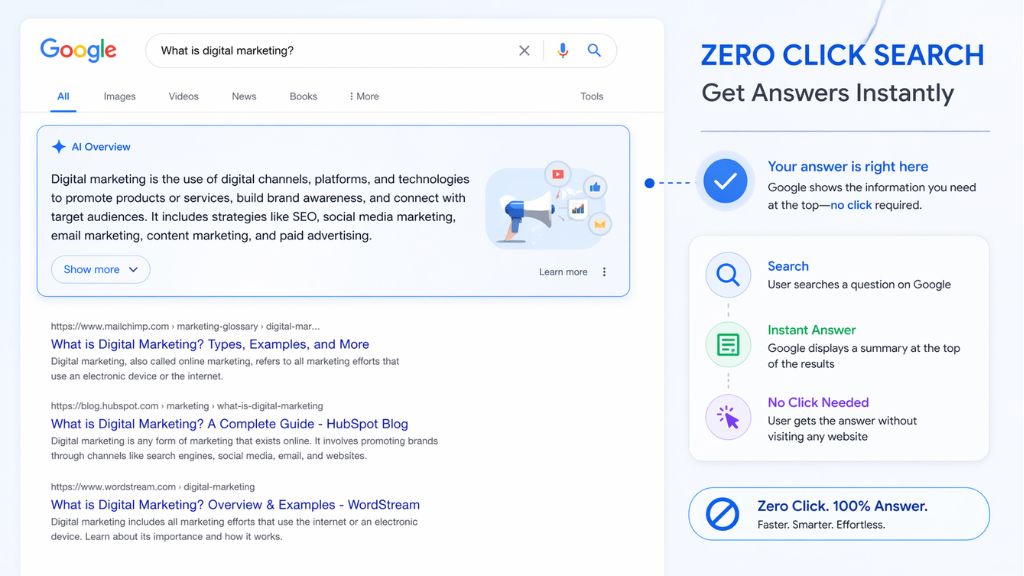
The Convenience Trap
Why would a user navigate to a website when an AI can provide a comparative list of products or health tips instantly?
- Medical Query: Searching for “Symptoms of flu” now provides a medical knowledge panel and AI summary.
- Dietary Query: Searching for “Protein in an egg” gives the answer in bold text.
The Visibility vs. Traffic Paradox
This creates a frustrating reality for publishers: The Visibility vs. Traffic Paradox.
Your website might be cited as a source by the AI, giving you “Brand Visibility,” but you receive zero “Referral Traffic.” In this era, you are being cited, but not visited.
Reality Check:
Ranking on page one no longer guarantees traffic. In 2027, being cited as a trusted source by an Answer Engine is the new SEO.
5. Evolution of Search Behavior: From Keywords to Intent
Intent has now officially overtaken keywords as the primary driver of search behavior. This is the most profound shift in the history of digital marketing.
Keywords are Fading; Intent is Scaling
In the old world, we optimized for strings like “best laptop 2024.” In the Answer Engine Era, users interact with AI as if they are speaking to a human expert.
- Old Search Pattern: “Cheap travel insurance”
- New Search Pattern: “I’m a 30-year-old traveling to Japan for two weeks; suggest a cheap insurance plan that covers extreme sports.”
While understanding the SEO basics guide is still essential to build a strong foundation, the era of simply matching keywords to queries is quickly coming to an end. Today, search is about understanding the ‘why’ behind the query.
The Conversational Shift
People are no longer just looking for a “thing”; they are looking for a “personalized solution.” If your content doesn’t address the specific “Why” and “How” behind a query, it will be ignored by the AI models that are looking for depth and context.
6. AI Platforms vs. Traditional Search Engines
The competition for attention is no longer just between Google and Bing. It is now a battle between the Open Web and Closed AI Ecosystems.
The Emerging Competition
Platforms like Perplexity AI and ChatGPT Search are eating into the market share of traditional engines. These platforms don’t have a legacy ad-revenue model to protect, which allows them to focus purely on the user’s need for speed and accuracy.
The Shift in User Dwell Time
Users are spending significantly more time inside AI interfaces.
The open web is losing the war for attention.
At Total InfoHub, we believe website dependency is reaching an all-time low.
If your content is not “citable” and authoritative enough for these platforms to reference, your brand will effectively become invisible. The middleman is no longer connecting you to your audience—it is replacing the need for that connection entirely.
7. Winners vs. Losers in the Answer Engine Era
In this new digital ecosystem, the middle ground is disappearing. You will either be an authority that AI respects, or a commodity that AI replaces. At Total InfoHub, we have categorized the coming “Great Divide” into two clear groups.
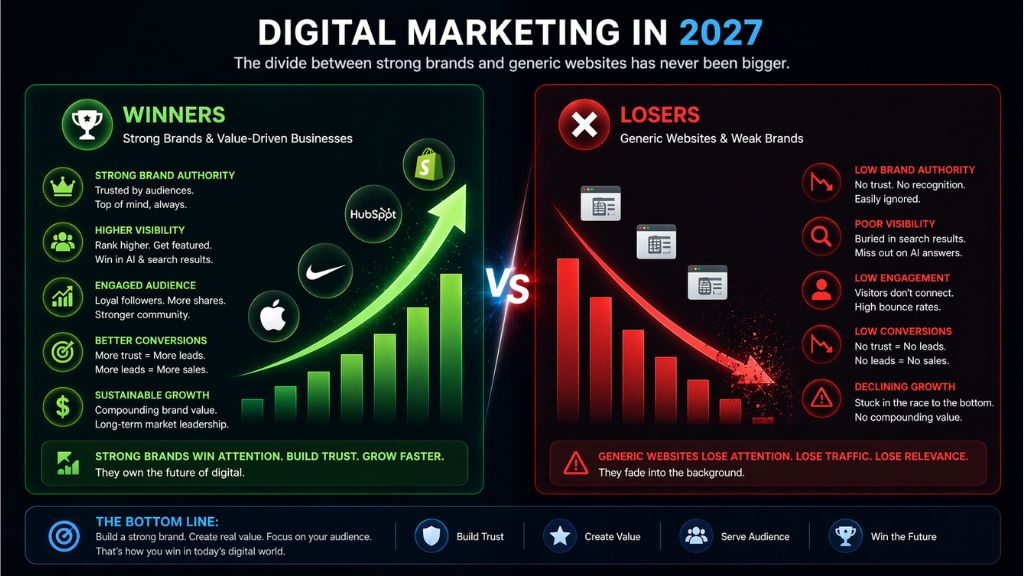
The Winners: The High-Authority Elite
- Strong Brand Websites: Sites that people search for by name. If a user types “Total InfoHub” instead of a generic keyword, you’ve already won.
- Original Research Creators: AI is a hungry machine that needs “fuel.” If you provide original data, surveys, or unique experiments, the AI must cite you as the source.
- Experience-Driven Publishers: AI cannot go outside, test a product, or feel an emotion. Creators who share “First-hand Experience” (the second ‘E’ in Google’s E-E-A-T) will be the new kings.
The Losers: The Generic Commodity
- Low-Quality & Copied Blogs: If your content is just a rehash of what’s already on Wikipedia or other blogs, you are invisible to an Answer Engine.
- Generic List-Based Content: The “Top 10 Best Laptops” era is over. AI can generate that list in 2 seconds. Unless you have unique, hands-on testing data, these lists will lose all traffic.
- AI-Generated Spam Sites: Using AI to fight AI is a losing battle. Search engines are becoming expert at identifying “fluff” content that adds no new value.
In the Answer Engine Era, relying on outdated tactics like mass-posting on a web 2.0 sites list or spamming forum submission sites will no longer protect your brand from becoming invisible. Generic, low-value backlinks are now easily ignored by AI models.
8. The New SEO: Generative Engine Optimization (GEO)
Traditional SEO isn’t dying, but it is being absorbed into a new framework: GEO (Generative Engine Optimization). The goal is no longer just “ranking #1,” but becoming the “Primary Source” for AI-generated answers.
What is GEO?
GEO is the process of optimizing content so that Large Language Models (LLMs) like GPT-4, Gemini, and Claude easily find, understand, and cite your information.
How AI Selects and Cites Content
AI doesn’t look for keywords; it looks for “Entity Authority.” It asks: Is this source trustworthy? Is this information unique? To get cited, your content must be structured in a way that AI can “scrape” the value easily while recognizing your brand as the expert.
Content Structure for AI Visibility
- Direct Answers: Start your sections with a clear, concise answer to the primary question.
- Structured Data: Use advanced Schema Markup to tell the AI exactly who you are and what your data represents.
- Factual Density: Increase the number of unique facts per paragraph. AI rewards “dense” information over “fluff.”
9. 5-Step Survival Strategy for 2027
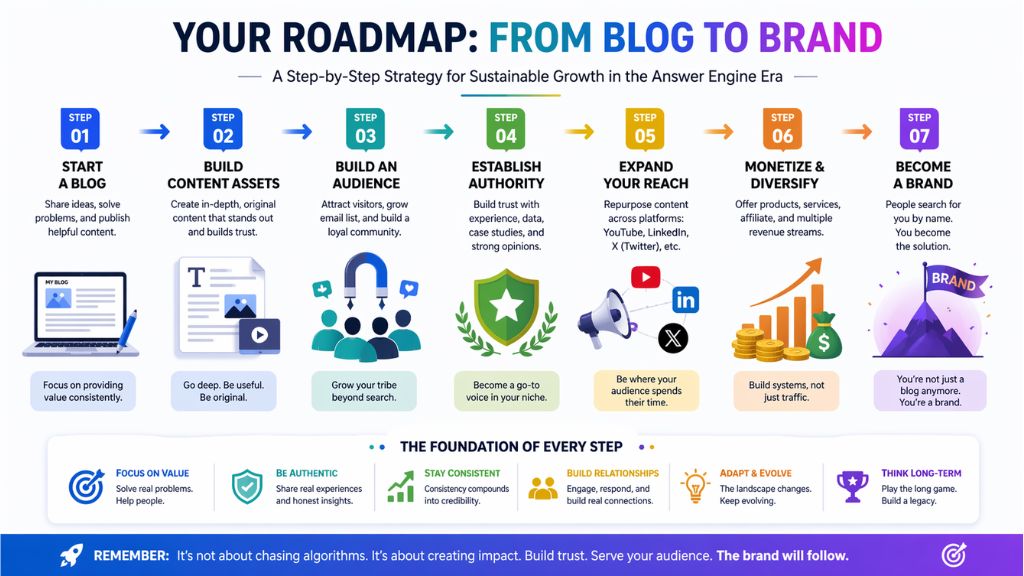
If you want to keep your brand alive in the Answer Engine Era, you need to pivot today. Here is the framework we are implementing at Total InfoHub. While the roadmap below shows the full journey of becoming a brand, here are the 5 critical survival steps you need to focus on for 2027:
Step 1: Build a Brand, Not Just a Website
Stop chasing “search volume” and start chasing “mindshare.” Your goal is to make people remember your name. A website is a collection of links; a brand is a trusted voice.
Step 2: Create Original and Citable Content
Ask yourself: “Does this article contain information that only I have?” If the answer is no, don’t publish it. Focus on case studies, original interviews, and unique data points that AI platforms will want to “cite” as a reference.
When you publish data and case studies that others want to reference, your backlink strategy shifts from manual outreach to organic growth. Citable content is the only way to earn trust from both humans and AI engines.
Step 3: Build a Direct Audience (The Ultimate Hedge)
You cannot rely on Google forever. Start building an email list, a Discord community, or a Telegram channel. A direct relationship with your audience is the only traffic source that an Answer Engine cannot steal.
Step 4: Establish a Multi-Platform Presence
Don’t put all your eggs in the “text” basket. Be on YouTube, LinkedIn, and X (Twitter). When AI summarizes your web content, your video or social presence keeps your brand identity alive in the user’s mind.
Step 5: Focus on Human Experience Content
Double down on “I” and “We.”
- Incorrect: “The best laptops for students are…”
- Correct: “We tested 15 laptops for 30 days in our lab, and here is what we found…”
AI can’t replicate “We tested.” That is your human advantage.
10. Case Study: Preparing Total Infohub for the Future
At Total InfoHub, we aren’t just writing about the future; we are actively re-engineering our entire platform to survive it. We realized early on that chasing high-volume, low-intent keywords was a race to the bottom.
Our Pivot: From Traffic Chasing to Trust Building
Previously, our strategy was like everyone else’s: find a popular keyword, write a 2,000-word guide, and hope for a Google click. Today, that approach is obsolete.
Old vs. New Approach
- The Old Way: Focusing on “How-to” articles that AI can easily summarize.
- The New Way: Focusing on “Proprietary Insights”—data and opinions that exist nowhere else but on our site.
Our Execution Plan
We are currently moving away from generic listicles. Instead, we are investing in “Hands-on Testing.” If we review a digital tool, we don’t just read the sales page; we use it for weeks, document the bugs, and share the “ugly truth.” This creates “Citable Content” that Answer Engines are forced to credit.
11. The Human Advantage: What AI Still Can’t Replace
Let’s be clear: AI is a master of patterns, but it is a stranger to experience. It can predict the next word in a sentence, but it cannot predict the next challenge in a real-world business scenario.
The Power of Storytelling
AI can explain the concept of “failure,” but it cannot tell the story of a midnight server crash and the lessons learned while fixing it. Total InfoHub prioritizes storytelling because that is where the human connection lives.
Deep Analysis and Intuition
AI provides data; humans provide meaning. A machine can tell you that a certain software has a 4.5 rating. A human expert can tell you, “Despite the high rating, the interface will frustrate your team during a high-pressure launch.” That nuanced, expert intuition is your greatest survival tool.
Emotional Connection
People don’t follow search engines; they follow people. By injecting personality, humor, and even skepticism into our content, we build an emotional bond that an algorithm simply cannot replicate.
12. What Will Content Look Like in 2027?
The “fluffy,” keyword-stuffed blog posts of 2024 will be extinct by 2027. The future of content is lean, authoritative, and multi-dimensional.
- Short and Direct Answers: Websites will become “Logic Hubs.” We will provide the direct answer first to satisfy the Answer Engines, followed by deep-dive analysis for the human readers.
- Multimedia-First Content: Text alone won’t cut it. Every major article will be supported by custom videos, original infographics, and interactive data.
- Community-Driven Ecosystems: Publishing will move from a “one-way street” to a “roundtable.” Trust-based publishing means your readers are part of the conversation, contributing their own data and experiences.
13. Final Thoughts: Adapt or Lose Visibility
SEO is not dead. It is simply evolving from a game of “Keywords” to a game of “Credibility.”
The Answer Engine Era is a filter. It will wash away the noise, the spam, and the generic “me-too” content that has cluttered the web for years. For creators who are willing to do the hard work—conducting original research, building a brand, and connecting with their audience—the future is actually quite bright.
The Bottom Line:
You can either wait for your traffic to disappear, or you can start building a brand that is too valuable to be ignored. At Total InfoHub, we choose the latter. The future of search doesn’t belong to the smartest algorithm; it belongs to the most trusted voices.
Adapt now, or become a ghost in the machine.