Off-Page SEO: The Most Powerful Strategies to Rank Higher in 2026
Introduction: The Hidden Engine of Your SEO Success
Let’s be real for a second. You’ve followed the standard playbook to the letter. You’ve spent late nights staring at keyword tools, bled over your keyboard writing the perfect blog post, and tweaked your on-page SEO until it was pixel-perfect. You hit “publish” feeling a sense of pride.
Then… nothing.
That gut-sinking feeling when you check your rankings and see you’re still buried on page three is one of the most demoralizing things in the digital world. You start questioning everything: “Is my content not good enough? Did I choose the wrong keywords?”
Let me stop you right there. Chances are, the issue isn’t with your content itself. The real reason you’re invisible is that you’ve only won half the battle. You’ve built a fantastic car, but you haven’t put any fuel in the engine.
Introducing Off-Page SEO: The Fuel for Your Rankings
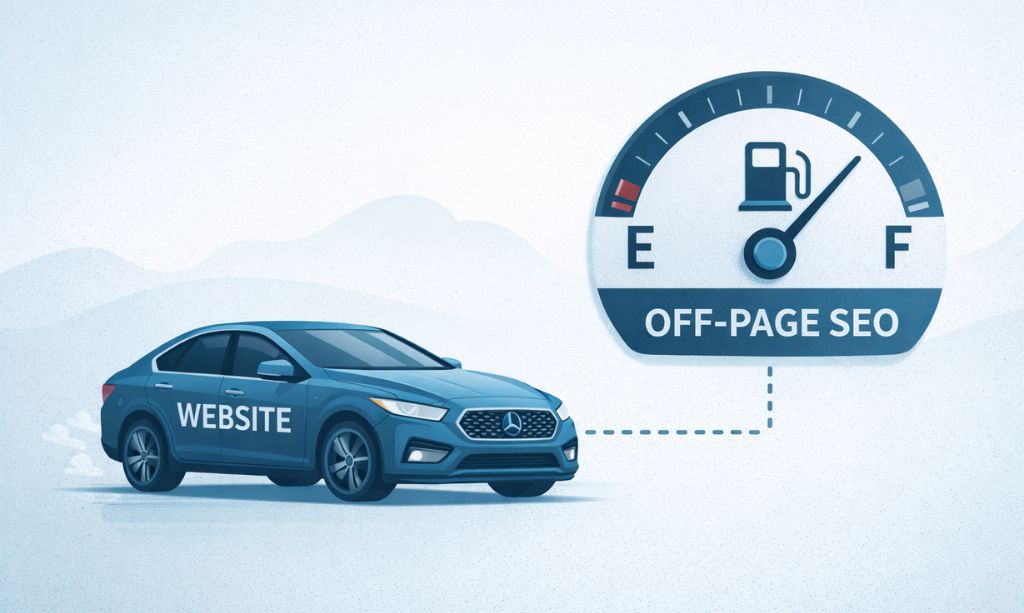
That fuel is Off-Page SEO.
Imagine you’ve just opened the coziest café in town. The coffee is amazing, the chairs are comfortable, and the music is perfect. That’s your great content and on-page SEO. But if no one outside your four walls is talking about you—no glowing reviews from food bloggers, no mentions in the local paper, no people telling their friends about you—you’re just an undiscovered secret.
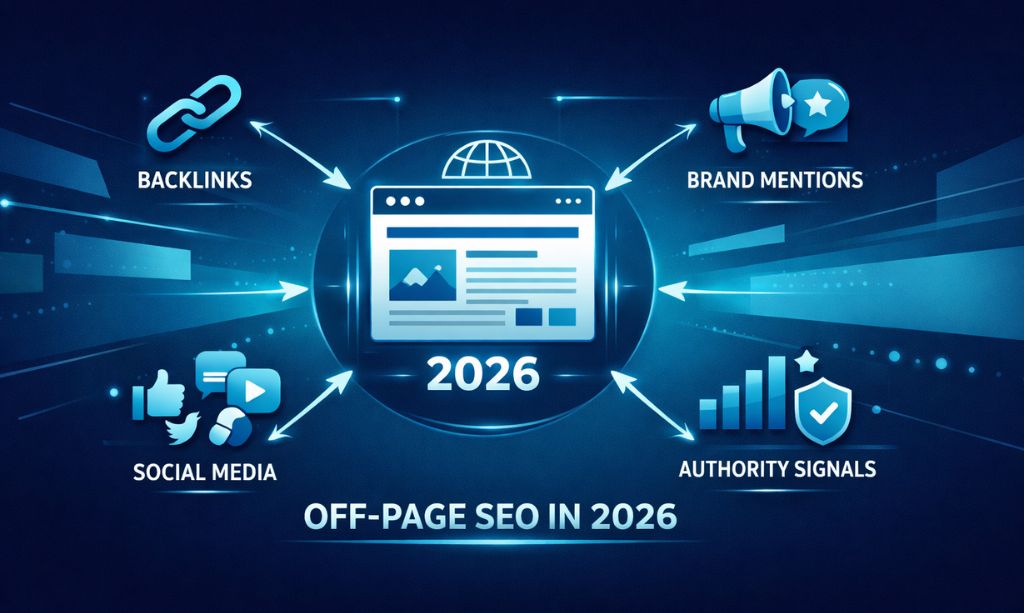
Off-Page SEO is that public reputation. It’s the online version of word-of-mouth. It’s the collection of endorsements (backlinks), conversations (brand mentions), and trusted reviews that scream to Google, “Pay attention! This website is an authority. People trust it, and so should you.” In 2026, Google isn’t just a machine; it’s a reputation engine. And building a powerful reputation is no longer optional—it’s the only way to the top.
What You’ll Learn in This Ultimate Guide
This isn’t another fluffy guide filled with theories you can’t use. This is your battle plan. We’re going to dive deep and give you a complete roadmap to building that five-star reputation online. Inside, you’ll discover:
- What actually works in 2026—not the outdated tactics that will get you penalized.
- Actionable, step-by-step methods for earning powerful backlinks, even if you hate outreach.
- The ‘secret weapons’ of off-page SEO that aren’t just about links (but are just as powerful).
- A beginner-to-advanced blueprint for creating your own strategy from day one.
- The fatal mistakes most people make and how you can sidestep them completely.
By the time you’re done here, you’ll have a clear, confident plan to make your website the authority Google can’t ignore. Let’s start building your engine.
Chapter 1: Decoding Off-Page SEO: The ‘Why’ Before the ‘How’
So, what is this mysterious “off-page SEO” everyone talks about? If the term makes you feel like you’ve missed a key meeting, don’t worry. You’re in the right place.
What is Off-Page SEO, Really?
Put simply: it’s your website’s street cred.
It’s every signal floating around the internet that isn’t on your actual website but points back to it, telling Google, “This one? Yeah, they’re the real deal.”
Think back to our cozy café. The quality of your coffee beans, the art on the walls, the cleanliness of your kitchen—that’s your On-Page SEO. It’s everything you control within your own domain.
But the real magic, the buzz that makes you the talk of the town, happens outside. That’s Off-Page SEO. It’s the:
- Whispers of a food blogger raving about your latte (a backlink).
- Chatter on social media where customers are tagging your location (a social signal).
- Mention in a “Best of the City” list that drives new people to your door (a citation).
Your on-page work is you telling the world you’re great. Your off-page presence is the rest of the world nodding in agreement. And guess which one Google trusts more?
Why This is Non-Negotiable in 2026
If you’ve been in the SEO game for a while, you remember the “old days”—a wild west of keyword stuffing and link spam. Those days are long gone. Google has grown up. It’s become smarter, more skeptical, and obsessed with one thing above all else: trust.
This is why your off-page strategy isn’t just a tactic anymore; it’s fundamental.
1. It’s the Proof Behind Your E-E-A-T
Google’s entire quality evaluation system runs on something called E-E-A-T: Experience, Expertise, Authoritativeness, and Trust. This is Google’s internal checklist for separating the wheat from the chaff.
The problem is, anyone can claim to be an expert on their own website. You can fill your pages with self-proclaimed titles like “The Ultimate Authority on XYZ. But it means nothing until another actual authority validates it. That’s the difference:
- On-page is what you claim.
- Off-page is the proof the world provides.
When a respected industry journal links to your research, that’s proof of your Expertise. When you’re quoted in a major news article, that’s a massive signal of your Authoritativeness. And when customers leave glowing reviews on trusted platforms, that builds unbreakable Trust. Off-page SEO is how you collect this evidence.
2. It’s Your Ticket into the AI Search Conversation
The game is changing again with the rise of AI-powered search (like Google’s SGE). These tools don’t just list links; they synthesize information and give a direct answer.
Now, put yourself in the shoes of that AI. When it pieces together an answer, whose voice will it use?
It’s not going to gamble on a lone voice in the wilderness. It looks for a chorus, not a solo artist. It scans the web for consensus. If multiple trusted sites are all pointing to your guide as the definitive resource, the AI sees that. It recognizes your content as a foundational piece of the conversation. Without strong off-page signals, you’re just shouting into the void, and the AI won’t hear you.
The SEO Triangle: Seeing the Whole Picture
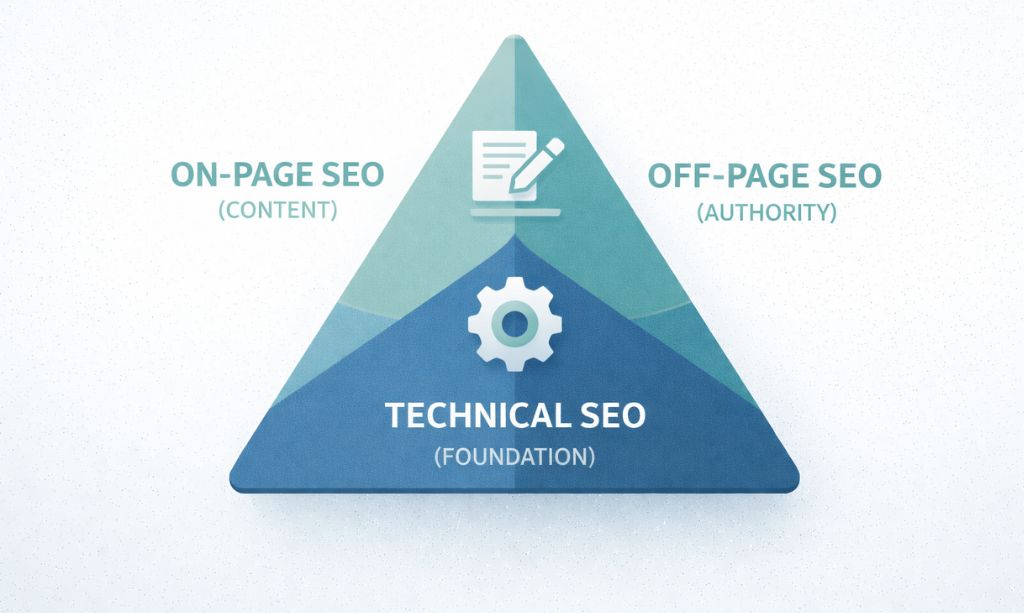
The easiest way to see how this all fits together is to think of your website as a house you’re trying to sell. To get the highest value, you need three things to be perfect:
- Technical SEO (The Foundation): This is the unbreakable foundation and solid structure. Is the house free of cracks? Is the plumbing working? If your site is slow, broken on mobile, or hard for Google to crawl, nothing else matters. The whole project is a bust.
- On-Page SEO (The Interior Design): This is the stunning interior. The beautiful content, the helpful layout, the smart use of keywords. This is what makes visitors want to stay once they’re inside.
- Off-Page SEO (The Location): And here’s the million-dollar question: Where is this house located? You could have the most beautifully designed, structurally perfect house in the world, but if it’s sitting in an isolated field with no roads leading to it, its value is zero.
Off-Page SEO is the crew that builds the highways to your front door and puts your house in the most desirable zip code on the internet. Without it, you’re just a hidden gem. With it, you become a landmark.
Chapter 2: Link Building – The Heartbeat of Modern Off-Page SEO
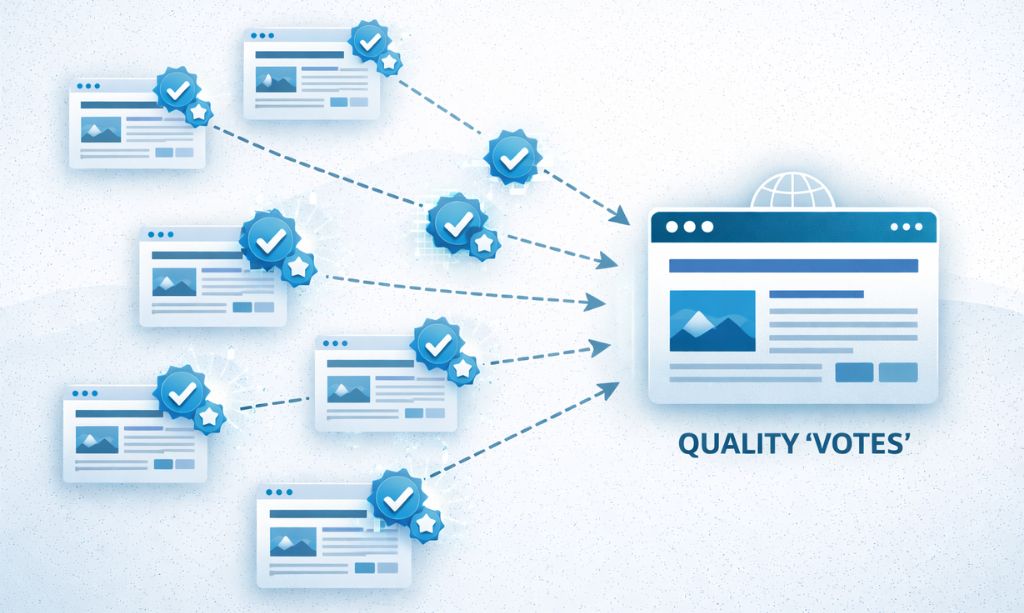
Let’s talk about the big one. If there’s one piece of the off-page puzzle that punches above its weight, it’s backlinks. For all of Google’s complex algorithms, this simple concept remains king: when another website links to yours, it’s a vote of confidence.
But—and this is a huge “but”—it’s no longer a numbers game. The days of chasing every link you could find are dead. Think of it less like collecting baseball cards and more like getting a letter of recommendation for a job. One glowing reference from a respected industry leader blows a hundred generic ones out of the water.
Your mission, should you choose to accept it, is to earn those powerful endorsements.
What a Damn Good Backlink Looks Like in 2026
So, how do you spot a link that actually moves the needle? It’s not magic; it’s a combination of a few common-sense factors.
1. Authority and Relevance: The Power Couple
- Authority: Is the linking site a respected player in its field? A link from Harvard’s website is a universe away from a link on a random, week-old blog. One is a stamp of approval from an institution; the other is just noise.
- Relevance: This is the gut check. Does the link even make sense? If your site sells handmade dog collars, a link from a top dog-training blog is a perfect match. A link from a site about antique clocks? That’s just plain weird, and Google’s algorithm is smart enough to raise an eyebrow. The context has to feel natural. A relevant link, even from a site with moderate authority, is often more powerful than an irrelevant one from a mega-site.
2. Anchor Text: The Art of the Signpost
The “anchor text” is the clickable part of a link. It’s the little signpost that tells both users and Google what they’ll find on the other side.
- Lazy Anchor Text: “click here” or “this website.” Useless.
- Smart Anchor Text: “this complete off-page SEO checklist.” Excellent. It sets the expectation and reinforces the topic.
But be careful here. If all your links use the exact same keyword-stuffed anchor text, it looks like you’re trying to cheat the system. A natural link profile looks, well, natural—a mix of your brand name (“Total InfoHub says…”), descriptive phrases, and even the occasional “here.”
3. “Dofollow” vs. “Nofollow”: Does it Still Matter?
You’ll hear these terms a lot. In simple terms:
- Dofollow links are the standard. They pass authority—the “link juice”—and are the primary goal of any link building campaign.
- Nofollow links (often found on social media, forums, and in blog comments) have a tag that essentially tells Google, “Don’t count this as an official endorsement.”
So, are nofollow links worthless? Not a chance. Think of it this way: a link from a hugely popular Forbes article, even if it’s “nofollow,” can send a flood of relevant traffic your way, build brand recognition, and signal to Google that you’re part of an important conversation. The most natural-looking (and effective) backlink profiles feature a healthy blend of both.
White Hat vs. Black Hat: The Farmer or the Gambler?
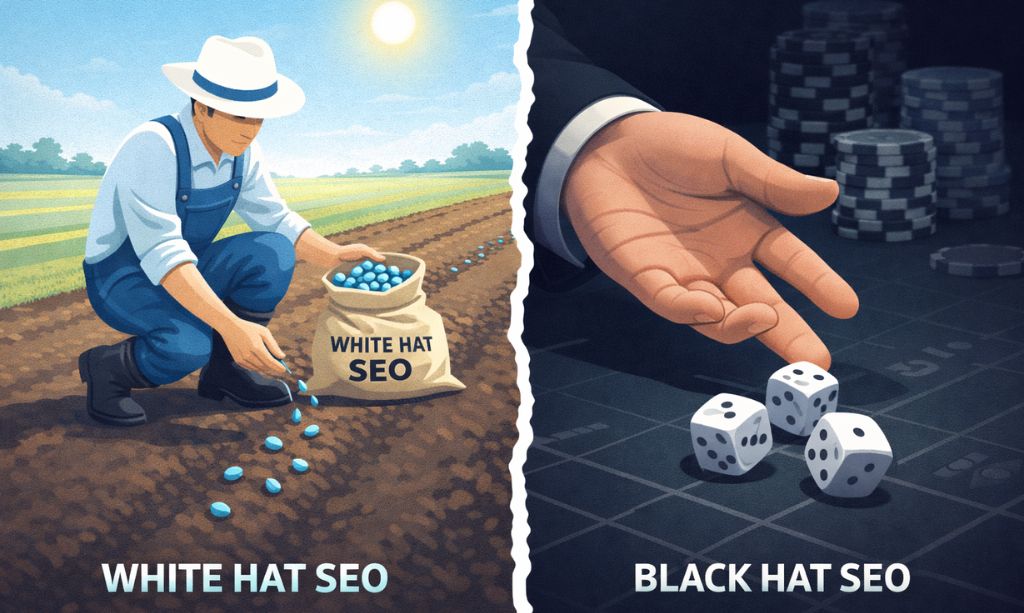
Ultimately, you have to choose a philosophy. Are you here to build something that lasts, or are you just chasing a quick high? Your answer to that question will define every single SEO decision you make.
The White Hat Way: Playing the Long Game
This is the honest-broker approach. It’s about deciding that you’re going to build something real—a brand that actually earns its reputation. Your off-page SEO isn’t about finding loopholes; it’s about proving your worth, day in and day out.
This is the farmer’s mindset. You do the hard work now—the digging, the planting, the daily watering—knowing the real payoff isn’t coming tomorrow. You’re building deep roots so that when the storms (and the inevitable Google updates) hit, you’re the one left standing. It’s the only way to create a genuine, lasting asset.
The Black Hat Gamble: The Sugar Rush
And then there’s the siren song of the shortcut. Black Hat is all about impatience. It’s the adrenaline rush of finding a crack in the system, a trick to get ahead now. These are the manipulative off-page SEO tactics that build a house of cards—buying links, using private networks, and hoping no one notices.
It’s a firecracker strategy. You get that immediate, thrilling explosion of traffic. For a week, maybe a month, you feel like you’ve outsmarted the system.
But the fall isn’t a gentle slide. It’s a sudden, catastrophic vanishing act. One day you’re on top, the next you’re invisible, slapped with a penalty that can follow you for years. It’s a bet you will almost certainly lose.
Your Playbook: Link Building Moves That Build Real Relationships
Let’s get out of the classroom and onto the field. These aren’t just abstract theories; they are the actual plays you can run to build a powerful off-page SEO presence. The key is to stop thinking about “tactics” and start thinking about “conversation starters.”
1. Guest Blogging: The Art of Being a Great Houseguest
Forget spamming the internet with low-quality articles. The modern approach is to treat it like being invited to a dinner party. Your job isn’t just to show up; it’s to be such a fantastic guest—by bringing a valuable, insightful contribution—that everyone at the table is glad you came. The link you get in your bio isn’t a payment; it’s a thank-you note.
To help you skip the tedious research phase, we have already done the heavy lifting for you. Check out our verified Top 150+ Free Guest Posting Sites List for 2026 to find high-authority blogs in your specific niche.
2. Broken Link Building: The ‘Internet Gardener’ Approach
This isn’t a tactic; it’s a mindset. While most outreach feels like asking for something, this one feels like tidying up a shared space. It’s the most respected method for a reason: you lead by giving.
Imagine you’re walking through a beautiful public garden and you notice a dead plant in an otherwise perfect flowerbed. The gardener is busy on the other side of the park. What do you do? You find them and simply say, “Just a heads-up, there’s a withered plant over in the rose section that’s spoiling the view.”
That’s the entire spirit of broken link building. You’re not a salesperson; you’re a fellow gardener of the internet.
You browse websites in your niche, and when you find a dead link, you’ve found that “withered plant.” Your outreach is a simple, helpful note to the site owner—the head gardener. You point out the problem and explain that it’s creating a dead end for their visitors.
Only after you’ve been helpful do you gently offer a replacement. It’s a no-pressure suggestion: “By the way, if you’re looking for a healthy new plant for that spot, I happen to have a thriving one right here.”
You’ve already improved their garden. The link you might get in return isn’t a payment you demanded; it’s a natural sign of appreciation between two people who care about the same space.
3. Resource Page Building: Becoming an Indispensable Staple
Your goal here is to make your content an unavoidable choice. Seek out those curated industry resource lists and create something that makes their existing list look incomplete without you.
4. Digital PR & Link Magnets: Creating Your Own Gravity
This is where your off-page SEO strategy catches fire. It’s the pivot from chasing individual links to building a bonfire that attracts everyone. You create something so inherently valuable—original data, a unique tool, a groundbreaking study—that linking to it becomes the obvious, smart thing for others to do.
5. The Skyscraper Technique: The Content Upgrade
This is a direct, competitive off-page SEO play. You identify the top-ranking content for your target keyword, and then you dedicate yourself to creating something that makes it look obsolete. You go deeper, you add more value, you design it better. Then, you reach out to everyone linking to that old content and simply offer them an upgrade.
6. HARO & Media Outreach: Borrowing Credibility
Journalists are under constant pressure to find expert sources. You’re an expert. Services like Help A Reporter Out (HARO) simply connect the dots. You provide a sharp, insightful quote for a story, and you can earn a mention and a link from a major publication. This is a fast track to the kind of high-authority off-page SEO signals that can take years to build otherwise.
7. Unlinked Brand Mentions: The Quickest Win
This is the lowest-hanging fruit in your entire campaign. People are already talking about you; they just forgot to link. Your job is to find those conversations. Use monitoring tools to discover these “unlinked mentions,” then send a polite, grateful email. You’re not asking for a favor; you’re simply asking to claim what’s already yours.
Besides these advanced tactics, every website needs a rock-solid foundation. I’ve written a complete manual on Off Page SEO Directory Submission that walks you through the process of getting listed in high-authority directories safely, without falling into the trap of low-quality spam sites.
To make this foundation even stronger, you should also focus on high-quality profile creation sites to establish your brand’s digital footprint.
Chapter 3: Beyond Backlinks: The Untapped Goldmines of Off-Page SEO
If you believe off-page SEO begins and ends with backlinks, you’re driving with one eye closed. Links get all the glory, sure. They’re the flashy lead singer of the band. But the real, sustainable power—the kind that builds a brand that lasts—comes from the rhythm section. These are the strategies that work quietly in the background to build an unshakable foundation of trust.
Google’s ultimate goal is to rank brands that people genuinely seek out. This chapter is about how to become one of them.
The Holy Grail: Building a Real Brand
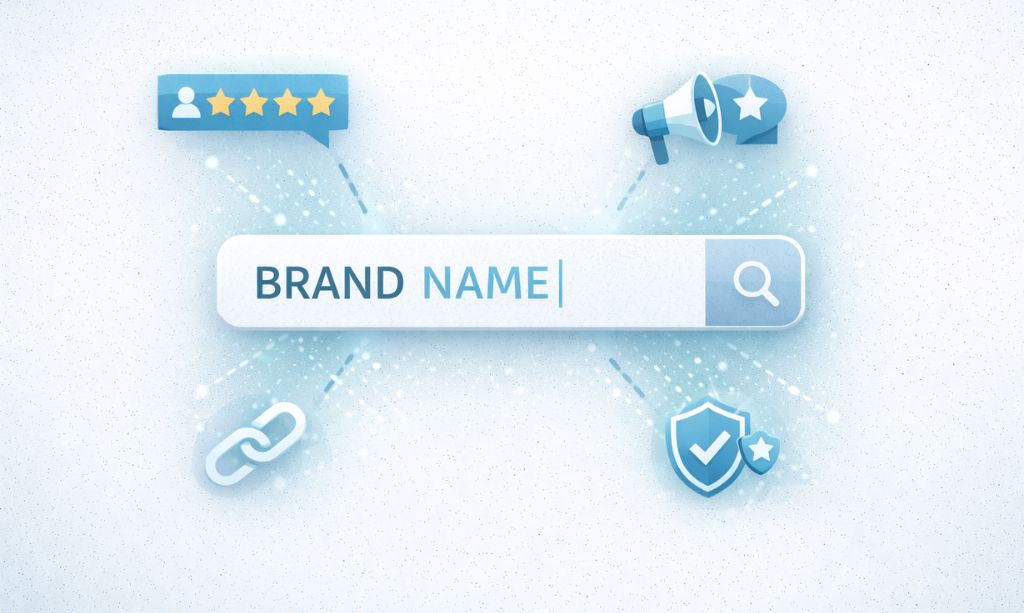
This is the endgame. The single most powerful off-page signal you can generate is when someone types your brand name directly into Google.
Think about it. People don’t just search for “running shoes”; they search for “Nike.” They don’t just look for “electric cars”; they look for “Tesla.” When a user bypasses a generic query and searches for you, it’s a screaming signal to Google that you have transcended the search results. You’ve become a destination. This doesn’t happen by accident. It happens when you become so reliable and authoritative that your name becomes synonymous with the solution.
Your Online Reputation is Your SEO
When was the last time you tried a new restaurant without glancing at the reviews first? Exactly. Your potential customers—and Google—are doing the same thing with your business.
- Your Google Business Profile (GBP) is Your Digital Welcome Mat: For any business with a physical location or service area, your GBP is ground zero for trust. It’s often the very first interaction a customer has with your brand online. Keeping it packed with fresh photos, accurate hours, and—most importantly—a constant stream of recent, positive reviews is not just a “local SEO” tactic. It’s a fundamental trust signal that echoes across all of Google’s services.
- Third-Party Reviews Are Your Unbiased Proof: Google pays attention to what people are saying about you on other trusted sites. A flood of positive reviews on a niche-specific platform (like G2 for software or Houzz for home contractors) is like having a crowd of independent experts vouching for you. It’s powerful, third-party validation that you can’t fake.
Social Media: The Fire Starter
Let’s kill a myth right now: Google doesn’t care about your follower count or how many likes your last post got. Those are vanity metrics. But to ignore social media is to throw away your best box of matches.
The true role of social media and active social bookmarking sites in off-page SEO is to be an accelerant.
You use it to get your content in front of human eyes. Those humans share it. It creates a spark. That spark can get noticed by a journalist, a blogger, or an industry influencer who has the power to give you what you really want: a high-authority backlink. The social share was the kindling; the backlink was the bonfire.
Get in the Trenches: Forums & Communities

Want to find out where your authority is really tested? Go where your audience hangs out and complains, asks questions, and seeks advice. I’m talking about the raw, unfiltered worlds of Reddit, Quora, and specialized online forums.
This is a game of patience and value, not spam. Your mission is to become part of the furniture. Answer questions thoughtfully. Offer advice freely. Become that person who consistently shows up with real solutions. After you’ve built that reputation, when you occasionally share a link to a resource on your site, it won’t be seen as spam. It will be seen as a gift. You’re not link-dropping; you’re reputation-building.
Stealing the Mic: Becoming an Audio Authority
If you want to fast-track your expert status, get yourself booked as a guest on a podcast. It’s one of the most efficient off-page strategies that exists today.
For the price of a one-hour conversation, you get:
- Borrowed Trust: You get to step onto someone else’s stage and speak directly to an audience that already trusts the host.
- A Branding Bullhorn: People hear your voice, your name, and your brand’s name, creating a much deeper connection than written text.
- A Golden Backlink: Nearly every podcast provides a link to their guest’s website in the show notes.
It’s a backlink, a PR play, and a networking move all rolled into one conversation. Find a show your audience loves and figure out what unique story or insight you can bring to their listeners.
Chapter 4: Your Game Plan for Off-Page SEO That Actually Works
Alright, we’ve covered the theory. Now for the fun part: building a real-world system. Most people approach their off-page SEO with a “throw everything at the wall and see what sticks” mentality. It’s a chaotic, soul-crushing way to work, and frankly, it’s why so many people give up.
You’re not going to do that. You’re going to have a game plan. A simple, repeatable process that turns that chaos into a calm, focused strategy. This is how effective off-page SEO stops guessing and starts building.
First, Know What Winning Looks Like
Before you write a single email, you have to define the finish line. “I want more links” isn’t a plan; it’s a daydream. It’s useless. You need to get brutally specific about what you’re tracking.
There are only two sets of numbers you need to care about:
- The Work You Put In (Your Effort): These are the actions you control. It’s your personal scoreboard for consistency. Instead of vague goals, make concrete weekly commitments to yourself. For instance: “This week, I will identify 20 potential link partners,” or “I will initiate 10 genuine email conversations.” These small promises are what build real momentum.
- The Payoff (The Results): This is what the work gets you. And let me be clear: there’s only one metric here that truly matters. Links from new websites (Referring Domains). Stop obsessing over your total backlink count. One link each from five different quality blogs is a thousand times more powerful than five links from the same blog.
Your first mountain to climb isn’t getting featured on a national news site. It’s this: Earn three to five new, relevant referring domains in the next 60 days. That’s it. It’s tangible. It’s doable. It’s your new north star.
Next, Spy on the People Already Winning
Why stumble around in the dark when your competitors have left a trail of breadcrumbs for you? Looking at their backlinks isn’t about jealousy; it’s about intelligence gathering. It’s the smartest shortcut in the entire SEO playbook.
Your mission is to answer a single, powerful question: “Who is linking to the people who outrank me, and what did they do to deserve it?”
Here’s how you do it, no fluff:
Go get a backlink tool (Ahrefs, Semrush, whatever you prefer). Find the 3-4 sites that are breathing down your neck in the search results—your real rivals. Plug them in.
Now, play detective. Don’t just scan the list of links. Study it. Is there a pattern? Are they all getting links from guest posts? Did one of them create a free tool that everyone is talking about? Did they publish original research that got picked up everywhere? You’re looking for their winning formula for off-page SEO.
Pay special attention to the sites that link to more than one of your rivals. Those are your hottest leads. They are already interested in your topic. You just haven’t introduced yourself yet.
Then, Write Emails That Don’t Get Instantly Deleted
This is the moment of truth. Most outreach fails because it’s lazy, impersonal, and selfish. It bursts into their inbox like a pushy door-to-door salesman, immediately getting the digital door slammed in its face.
Your email is an interruption. You have about three seconds to prove it’s a welcome one. The only way to do that is to make it 100% about them.
Forget templates. Think of it as a simple, human-to-human conversation.
Start with proof you’re not a robot. Mention something specific. Show you’ve actually done your homework. A single, specific line like, “Your recent post on X really made me think about Y,” is all it takes. That small investment of 20 seconds is what separates your email from the ninety-nine others in their inbox.
Then, give them your “what’s in it for them.” It has to be crystal clear.
- When you spot a broken link, a friendly heads-up works wonders: “Just a quick note—I believe one of the links on your excellent resources page might be broken.” It’s pointing to a 404, which creates a frustrating dead-end for your readers. I have a live guide on that same topic if you need a quick fix.”
- If you’re pitching a guest post: “Your audience loved your article on X. I have a follow-up idea about Y that I think they’d get a ton of value from.”
You’re not asking for a favor. You’re offering a solution.
Finally, Systemize Everything (Or Burn Out)
This is the unglamorous part, the daily grind, that separates the pros from the amateurs: consistency. To maintain it, you need a simple command center to log your conversations—who you’ve emailed, when, and what happened. Don’t overcomplicate it; a basic spreadsheet is your new best friend.
And now for the part that everyone skips, but that makes all the difference: the follow-up. People are busy. Inboxes are a nightmare. A short, polite nudge a few days later—”Hey, just wanted to bump this up in your inbox”—can be the single action that turns a ‘no reply’ into a ‘yes’. Send one follow-up. Maybe a second one a week later if you’re feeling bold. Then, let it go.
Your Weekly Off-Page SEO Rhythm: A Simple Checklist
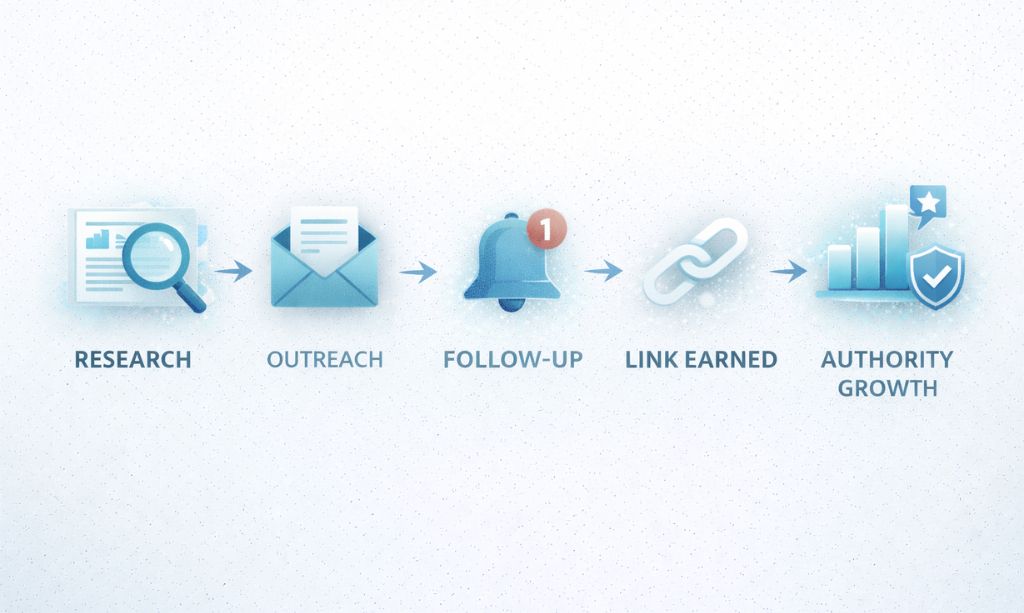
Feeling overwhelmed? Don’t be. Just focus on this simple weekly loop:
- ✅ Find: Identify 10 new, high-quality outreach targets.
- ✅ Reach Out: Send 5 hyper-personalized, value-driven emails.
- ✅ Track: Update your spreadsheet with who you’ve contacted.
- ✅ Follow Up: Send 3 polite follow-ups to people who didn’t reply last week.
- ✅ Repeat: Do this every week, and you’ll build unstoppable momentum.
This isn’t a complex machine. It’s a rhythm. This consistent effort is the very core of a successful off-page SEO strategy. Now go play it.
Chapter 5: The Essential Off-Page SEO Toolkit
You could try to fix a modern car engine with just a wrench and a screwdriver. You might even get somewhere. But a professional mechanic has a full chest of specialized tools that make the job faster, more precise, and infinitely more effective.
Off-page SEO is no different. While the strategy and human element are king, the right tools give you superpowers. They turn guesswork into data-driven decisions and save you hundreds of hours of manual labor.
Let’s be upfront: the best tools aren’t free. But don’t think of them as an expense. Think of them as an investment in your most valuable asset—your time. You don’t need all of them, but you do need the right ones for the job. Here’s your essential, no-fluff toolkit.
For Backlink Analysis & Competitor Research: The ‘Big Three’
This is your command center. These tools give you x-ray vision into the internet, allowing you to see exactly who links to whom and why. This is the foundation of any serious off-page SEO campaign.
- Ahrefs: If there’s an undisputed king of backlink data, this is it. Ahrefs’s backlink index is a beast, known for its size and how quickly it finds new links. Its “Site Explorer” is the gold standard for dissecting a competitor’s link profile. If your primary focus is purely on link building and competitor analysis, many pros would argue that Ahrefs has the edge.
- Semrush: While Ahrefs started as a backlink tool, Semrush started as a keyword research tool. Today, they are both all-in-one SEO powerhouses. Semrush is a true Swiss Army knife. Its backlink tools are excellent, but it also shines in keyword research, on-page audits, and rank tracking. It offers a complete view of a website’s entire digital footprint.
- Moz Pro: Moz is one of the OGs (Original Gangsters) of the SEO world. Its toolset is famously user-friendly, making it a fantastic choice for beginners or those who find the other two a bit overwhelming. Moz pioneered the concept of “Domain Authority” (DA), a metric that, while not used by Google, has become an industry standard for quickly gauging a website’s authority.
My Verdict: If you can only afford one, the choice depends on your needs. For pure, hardcore off-page analysis, Ahrefs is phenomenal. For a fantastic all-around SEO suite that does everything well, Semrush is a beast. If you’re just starting and want the most intuitive experience, Moz Pro is a great place to begin.
For Outreach & Email Finding: The Connection Tools
A brilliant idea or a perfect piece of content is useless if you’re sending it to info@company.com and praying someone sees it. These tools help you find the right people and manage the conversation.
- Hunter.io: This is the go-to tool for playing email detective. Its one job is to find the email addresses associated with a specific domain, and it does that job incredibly well. With its simple browser extension, you can visit a website, click a button, and get a list of likely email contacts. It’s simple, effective, and an absolute must-have for targeted outreach.
- Pitchbox: Hunter helps you find the email; Pitchbox helps you manage the entire outreach workflow. Think of it as a CRM (Customer Relationship Management) tool built specifically for link builders and PR pros. It helps you track campaigns, automate follow-ups, and manage communication at scale.
My Verdict: Start with Hunter.io. It’s essential for finding the right contact information. When your outreach efforts grow to the point where your spreadsheet starts to feel like a chaotic mess, you’ll know it’s time to graduate to a full-fledged system like Pitchbox.
For Monitoring Brand Mentions: The Listening Tools
This is where you find the lowest-hanging fruit in all of off-page SEO: people who are already talking about you but just forgot to link.
- Google Alerts: This is the easiest, most obvious first step. It’s free, it takes two minutes to set up, and it’s a no-brainer. You tell Google your brand name (and any variations), and it will email you whenever it finds new mentions on the web. Is it perfect? No, it misses a lot. But for a free tool, it’s essential.
- Brand24: This is the professional upgrade. A tool like Brand24 goes way beyond what Google Alerts can do. It scours not just news sites and blogs, but also social media, forums, podcasts, and review sites. It provides sentiment analysis (are people saying good or bad things?) and gives you a comprehensive dashboard of your brand’s entire online conversation.
My Verdict: Set up Google Alerts right now. Today. There’s no reason not to. When your brand grows and you start needing to track conversations across social media and other platforms, investing in a paid tool like Brand24 will become an indispensable part of your strategy.
Chapter 6: Lessons from the Trenches: Real-World Wins & Costly Mistakes
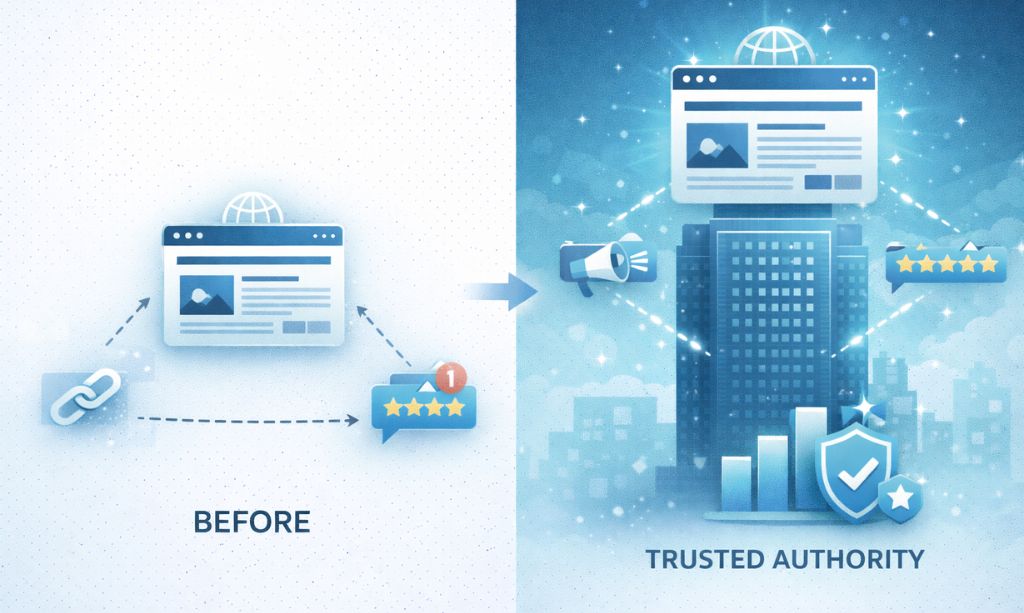
Okay, let’s stop talking in hypotheticals. Theory is one thing, but seeing how this stuff plays out in the real world is where the lessons really stick. This chapter is all about that—a look at a couple of real-world wins and a brutally honest list of the landmines you need to avoid stepping on.
Think of this as your field guide to sidestepping the pain I and so many others have gone through.
War Story #1: The Tiny Blog That Landed a Link from Forbes
Picture a small personal finance blog. Let’s call them “Smart Savers.” They had great advice but were totally invisible, buried in the search results. They knew they couldn’t win by playing the same old guest-posting game. They had to do something different.
The Gambit: They Created Their Own News.
They realized journalists don’t care about blogs; they care about stories. And the best stories are backed by fresh data. So they ran a simple survey of their small audience, asking one question: “What’s your single biggest financial regret?”
They packaged the surprising results—it turned out to be “not investing earlier,” not student debt—into a slick one-page report with a punchy headline and a shareable infographic. This was their “link magnet.”
The Move: They didn’t beg for links. They acted like a PR firm. They built a small, targeted list of finance reporters and sent a short, professional email: “Hi [Reporter], we just ran a study on financial regrets and the results surprised us. Thought you might find it interesting for a story.”
The Payoff: A reporter from Forbes bit. The data was fresh, the angle was unique. The journalist featured their surprising data in a new article, crediting the blog’s original study with a direct, authoritative backlink. That one link was an earthquake for their authority. It brought them credibility, traffic, and the kind of trust signal that money can’t buy.
The Lesson: Stop asking for links. Start creating things that deserve links.
War Story #2: The Plumber Who Conquered the Local Pack
Now, let’s talk about a local plumbing company, “City Plumbers,” in a super competitive town. Their website was fine, but they were invisible on Google Maps, which is where all the real money is for a local business.
The Gambit: They Weaponized Their Google Business Profile.
Their first move was a crucial mindset shift: they stopped seeing their GBP as a static entry and started treating it as an active sales tool. This meant the default map photo was the first to go, swapped for crisp pictures of their actual crew—putting a real face to the name.
They then painstakingly listed out every service, so a customer in need would know instantly that they were in the right place. They even populated the Q&A section with answers to the most common queries, essentially becoming their own best customer service rep.
The Move: This was the killer part. They built a simple system. The moment a job was done, the customer got an automated text: “Thanks for using City Plumbers! If you have 10 seconds, we’d be so grateful for a review at this link.” It was simple, immediate, and frictionless.
The Payoff: They went from a handful of old reviews to a flood of new, glowing ones. The owner made it a point to personally reply to every single one, thanking the happy customers and publicly resolving issues with the rare unhappy one. Within months, they shot to the top of the “map pack.” Their phone started ringing off the hook.
The Lesson: For local businesses, your reputation is your ranking. A relentless focus on generating fresh reviews on your GBP is the most powerful off-page signal you have.
The 7 Dumbest Off-Page SEO Mistakes You Can Make
I’ve made some of these. I’ve seen clients make all of them. Read this list. Memorize it. Don’t be these people.
- Buying Links. Just don’t. It’s the SEO equivalent of building your house on a sinkhole. It might look fine for a minute, but it will eventually collapse and take everything with it.
- Being Irrelevant. Getting a link from a powerful but totally unrelated site is almost useless. Google isn’t stupid. Context is king. A link from a small but highly relevant industry blog is worth more.
- Sending Robotic Outreach. If your email starts with “Dear Sir/Madam” and contains the phrase “I was impressed with your high-quality content,” just delete it yourself and save everyone the time. Be a human.
- Choking on Anchor Text. If you force every link to have the exact same “best plumber in new york” anchor text, you’re waving a giant red flag at Google that says, “I’m trying to manipulate you!” Let it be natural.
- Being a “Dofollow” Snob. Yes, dofollow links are great. But a profile that has only dofollow links looks fake. Nofollow links from great sites are a sign of a healthy, real-world presence.
- Chasing Numbers. The person with 500 spammy directory links loses to the person with 5 amazing, relevant links. Every time. Stop counting and start making your links count.
- Being Impatient. This is the big one. Off-page SEO is like planting a tree. You do the work, you water it, and then you have to wait. If you expect to see results next week, you’ll quit before the magic happens.
Quick Myth Busting
- Myth: “Social shares are a ranking factor.”
- Truth: Nope. But they get your content in front of people who might then decide to link to it. Treat it as a promotional tool, not a direct ranking signal.
- Myth: “Mass directory submission is still a viable off-page SEO tactic.”
- Truth: This isn’t 2008. Unless it’s a major, highly-respected industry-specific directory, you’re wasting your time. To learn how to distinguish between these junk sites and high-quality opportunities, follow my guide on Off Page SEO Directory Submission to build trust the right way.
- Myth: “Links are all that matter.”
- Truth: Links are the loudest signal, but they won’t save a technically broken site with terrible content. It all has to work together.
Chapter 7: Where This is All Headed (And How Not to Get Left Behind)
Okay, let’s bring this all home with a look over the horizon. And no, I don’t have a crystal ball. But you don’t need one to see the direction the river is flowing. The tactics we’ve talked about are what work right now. But the principles behind them are what will keep you winning for the next ten years.
If you want your off-page SEO efforts to be future-proof, you need to stop thinking like a tactician and start thinking like a brand builder. Here’s what’s coming.
The New Link Building Mantra: Relevance Now Trumps Raw Authority
For the longest time, the goal was simple: get links from the biggest, most authoritative websites possible. That old “Domain Authority” mindset. That’s changing. It’s becoming less about the raw power of the domain and more about its topical reputation.
Here’s the gut check: Google’s getting freakishly good at knowing who the real experts are. A link from a niche blog written by a 20-year veteran in your field, a blog that only covers your specific topic? That’s starting to look a lot more powerful than a generic link from a huge news site’s lifestyle section.
What you need to do: Stop chasing logos. Start chasing relevance. Obsess over getting endorsements from the true specialists in your corner of the internet. That’s how you build a reputation that Google’s algorithm can’t help but respect.
AI Isn’t Coming for Your Job; It’s Coming for the Grunt Work
People are panicking about AI. Don’t. AI is the greatest assistant a creative off-page SEO has ever had. All the stuff you hate doing? The hours spent digging for the right contact person? The brain-numbing task of finding relevant blogs? AI is going to eat that for lunch.
It will free you up to focus on the things that actually matter—the human stuff. The strategic thinking. The creative brainstorming for a “link magnet.” The relationship-building with a key journalist.
What you need to do: Learn to use AI as your research intern. Let it find the targets. Let it analyze the data. Then, you step in and do what the machine can’t: be creative, be charming, and be human. Your value will shift from the “doing” to the “thinking.”
The Only Thing That Will Matter is Brand
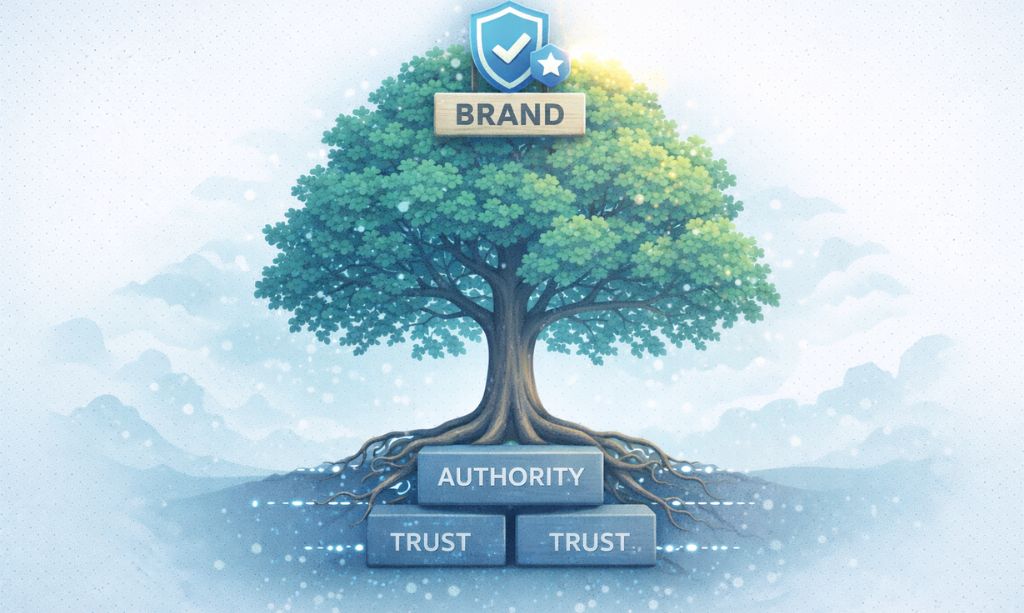
If you take nothing else away from this guide, let it be this single, fundamental truth.
Stop. Chasing. Links.
Start. Building. A. Brand.
Every algorithm update, every change Google makes, is pushing us in one direction: to reward real brands that people know, like, and trust, and to weed out the anonymous, faceless websites trying to game the system.
In a few years, your off-page SEO success won’t be measured by your backlink profile. It will be measured by this: when someone has a problem you can solve, does your name pop into their head?
Do people search for you directly? Do they recommend you in community forums without you even asking? Do they trust your advice implicitly?
That is the holy grail. That’s a brand. And when you build a brand that strong, a funny thing happens. The off-page SEO takes care of itself. The links come naturally. The mentions happen organically. The rankings become a reflection of the genuine authority you’ve built in the real world. That’s the only sustainable strategy. It’s the only game worth playing.
Your Off-Page SEO Questions, Answered
1. What’s the real point of off-page SEO?
Think of it like this: off-page SEO is about having credible character witnesses vouch for your site in the court of Google. It’s the collection of external signals (links, mentions, reviews) that tell the algorithm, “This site isn’t just saying it’s an expert; others confirm it.”
2. How is off-page SEO different from on-page SEO?
It’s the difference between writing a brilliant manuscript and getting rave reviews for the book cover. On-page SEO is you, alone, perfecting the manuscript—the content, the structure, the keywords. Off-page SEO is what the rest of the world says about your book once it’s out there.
3. Is off-page SEO just another name for link building?
That’s a common oversimplification. Links are the memorable melody, for sure. But a solid off-page SEO strategy is the whole song—it needs the rhythm section of a strong brand reputation and the harmony of positive reviews to truly work.
4. When will I actually see results from this stuff?
Think of it like going to the gym. You won’t see a six-pack after one workout, and you shouldn’t expect to. You’re building foundational strength, not looking for a quick fix. You might feel small improvements early on, but expect to see the real, noticeable difference after six months of consistent work.
5. I’m a beginner. What’s one off-page tactic I can start today?
Without question, start with Broken Link Building. It’s the digital equivalent of politely telling someone, “Excuse me, I think you dropped this.” You’re starting the relationship by being helpful, not by asking for something. By pointing out a dead link and offering a solution, you make the interaction a win-win.
Conclusion: Your Work Starts Now
Okay, let’s land this plane. We’ve gone through the strategies, the tools, and the mindset. You now know more about building real authority online than 99% of your competitors. But the guide is over. Your work is just beginning.
Don’t get lost in the fifty different tactics we talked about. It all comes back to a single, gut-level question: When someone in your field has a problem, does your name come to mind?
That’s the entire game. Becoming the obvious, trusted, go-to answer. Every link, every mention, every review is just a small piece of evidence that proves you are that answer.
Your First Mission: Get Off Zero TODAY
Reading is passive. Building is active. To turn this knowledge into momentum, you need to get a quick win on the board. So here’s my challenge to you. Don’t put this off. Do these three things before your head hits the pillow tonight.
- Go Eavesdrop: Open Google Alerts. Set up trackers for your brand name and your top competitor. This is your new listening station. It’s free and takes two minutes.
- Do Some Quick Spy Work: Pick one competitor. Use a free backlink checker and look at the last five links they got. Just look. See if you can spot a single opportunity. That’s it. You’re now thinking strategically.
- Send One Helpful Email: Find one broken link on a relevant site in your space. Just one. Send a short, friendly, human email to the site owner letting them know. Don’t even worry if they reply. Your goal is just to start the engine.
Ready to build your first high-authority link? You can start with our Ultimate Guest Posting Sites List, or check out our complete collection of SEO resources below to plan your full link-building campaign.
Want to Master Off-Page SEO? Check Out Our Essential Guides:
If you want to rank your website in 2026, you need a holistic approach. I have personally compiled these lists to help you build a natural, high-authority backlink profile:
- 100+ High DA Article Submission Sites for 2026
- Top 150+ Business Listing Sites for SEO
- Top Classified Submission Sites for SEO
- 150+ High DA Social Bookmarking Sites List 2026
- Top 300+ Free Profile Creation Sites List for 2026
- Top 150+ Free Guest Posting Sites List for 2026
- Free Press Release Submission Sites List (2026)
- 100+ Free Directory Submission Sites List for 2026
A Final Thought: Play the Long Game
This work isn’t glamorous. It won’t bring you traffic overnight. A lot of it feels like you’re shouting into the wind.
Good.
This is the slow, steady, day-in-day-out work of building a reputation brick by brick. Every helpful comment you leave on a forum, every personalized outreach email you send, every piece of amazing content you create is another brick in the foundation.
Most people don’t have the patience for it. They’ll chase the shortcuts, buy the snake oil, and wonder why they’re still stuck a year from now. You won’t be. You’ll be the one who built something real.
Focus on that. Build the brand, build the reputation, and be relentlessly helpful. The rankings are just the proof that you built something that matters.
P.S. All these strategies are incredibly powerful, but they require a platform. If you’re just at the beginning of your journey and need help with the first step, our step-by-step guide to starting your own blog will get you up and running.